
Trapzilla Grease Trap
Grease buildup in commercial kitchens can cause costly drainage issues, compliance headaches, and environmental concerns. That’s why choosing the right grease trap is essential.
If you're ready to get serious** about your sewage systems and grease management, our team of experts is ready to help. Whether you need a new system installed or ongoing maintenance, we provide comprehensive services for both residential and commercial clients.
high-efficiency commercial grease trap for UK kitchens
Grease buildup in commercial kitchens is one of the most common (and most preventable) causes of blocked drains, failed compliance checks and unplanned downtime. If your kitchen produces fats, oils and grease (FOG) at volume, choosing the right grease trap isn’t optional; it’s the difference between a smooth-running kitchen and an expensive emergency callout.
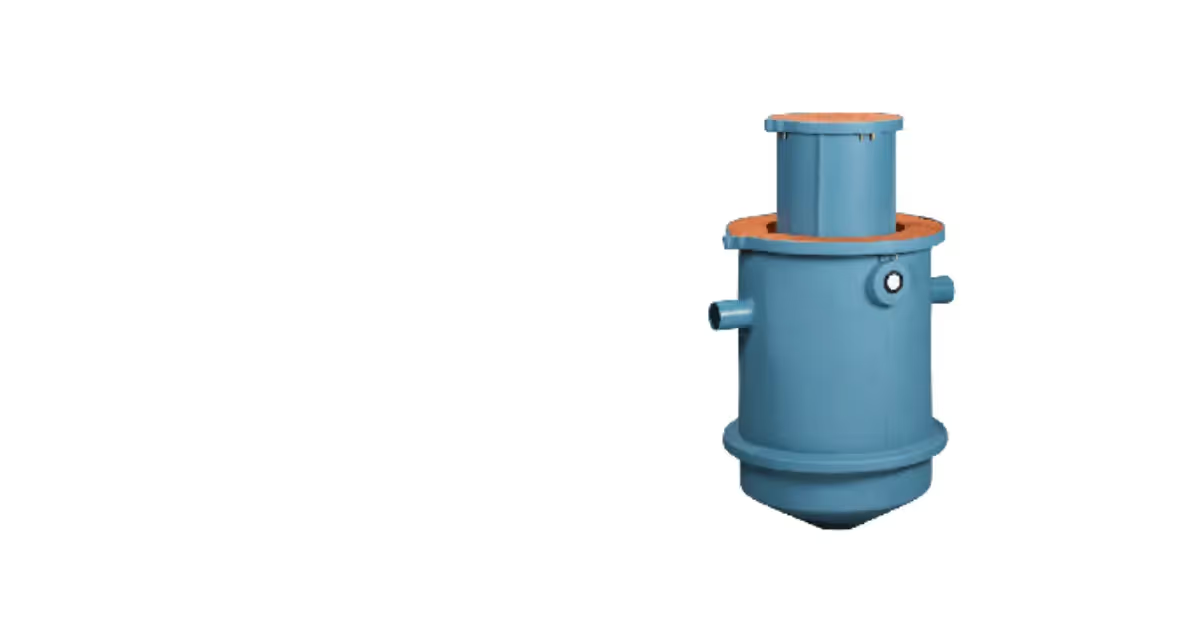
At serious**, we supply, install and maintain the Trapzilla grease trap, a high-efficiency grease interceptor built for commercial kitchens that need maximum FOG capture with minimum maintenance.
what is a grease trap and why does your commercial kitchen need one?
A grease trap (also known as a grease interceptor or grease separator) is a unit fitted into your kitchen drainage that captures fats, oils and grease before they reach the public sewer. Wastewater flows through the trap, grease rises and is retained, and cleaner water continues on to the drainage system.
Under UK Building Regulations Part H, commercial kitchens serving hot food and connected to mains drainage are expected to have an effective means of grease removal in place. Local water authorities can inspect premises, request evidence that FOG waste is being collected by a licensed contractor, and issue fines or enforcement action against businesses contributing to sewer blockages.
Commercial kitchens that don’t manage FOG properly risk:
- Blocked drains and sewer backups caused by grease solidifying in pipework, leading to costly emergency repairs and potential closure while repairs are carried out.
- Compliance failures and fines if a local authority inspection finds inadequate grease management or missing waste transfer records.
- Environmental damage, as FOG entering watercourses contributes to pollution and harms local ecosystems.
- Reputational damage, particularly for hospitality and food service businesses where hygiene failures are highly visible to customers and regulators alike.
A correctly sized, well-maintained grease trap is the simplest way to avoid all four.
what is trapzilla? the high-capacity grease interceptor built for busy kitchens
Trapzilla is a next-generation grease interceptor designed to outperform traditional grease traps on every measure that matters to a busy commercial kitchen: capacity, maintenance frequency and long-term running cost.
Unlike standard grease traps that fill quickly and need weekly attention, Trapzilla is engineered to capture and retain up to 95% of FOG even under high-volume wastewater flow. That means fewer call-outs, less disruption to kitchen operations, and a lower total cost of ownership over the lifetime of the unit.
key features of the trapzilla grease trap
- High grease retention capacity – Holds significantly more FOG than conventional grease traps before needing to be emptied.
- Compact, space-saving footprint – Designed to fit kitchens with limited back-of-house or under-sink space, without compromising on performance.
- Straightforward installation – Fits into new and existing drainage systems with minimal disruption to your kitchen.
- Durable, corrosion-resistant construction – Built to withstand constant exposure to hot water, oils and food waste without degrading.
- Reduced service frequency – Fewer scheduled empties means lower ongoing maintenance costs and less downtime.
trapzilla vs traditional grease traps: what’s the difference?
Most older or budget grease traps rely on small tanks that fill up fast and require frequent manual cleaning, often weekly, sometimes more. For a busy kitchen, that adds up to real labour costs and real risk if a service is missed.
Trapzilla is built specifically to solve that problem:
- Higher FOG retention – traps more grease per service interval, so you’re not constantly topping up maintenance visits.
- Longer operational lifespan – corrosion-resistant materials resist the wear that shortens the life of cheaper units.
- Lower maintenance burden – fewer interruptions to kitchen workflow and lower total servicing costs across the year.
- Consistent wastewater flow – reduces the risk of blockages building up between scheduled services.
is a trapzilla grease trap right for your business?
Trapzilla suits any food-producing business with a hot food kitchen connected to mains drainage, including:
- Restaurants, pubs and gastropubs
- Hotels and hospitality groups
- Catering companies and contract caterers
- Food processing and manufacturing facilities
- Schools, care homes and institutional kitchens
If your kitchen is currently relying on an undersized or outdated grease trap, struggling with frequent blockages, or due for an upgrade ahead of a compliance inspection, Trapzilla is worth a conversation with our team.
grease trap installation, maintenance and tankering across the UK
A grease trap is only as good as the service plan behind it. At serious**, we don’t just supply Trapzilla units; we provide the full lifecycle of support:
- Grease trap installation – correctly sized and positioned for your kitchen’s output and layout.
- Grease trap servicing and maintenance – scheduled cleaning to keep your system compliant and operating efficiently.
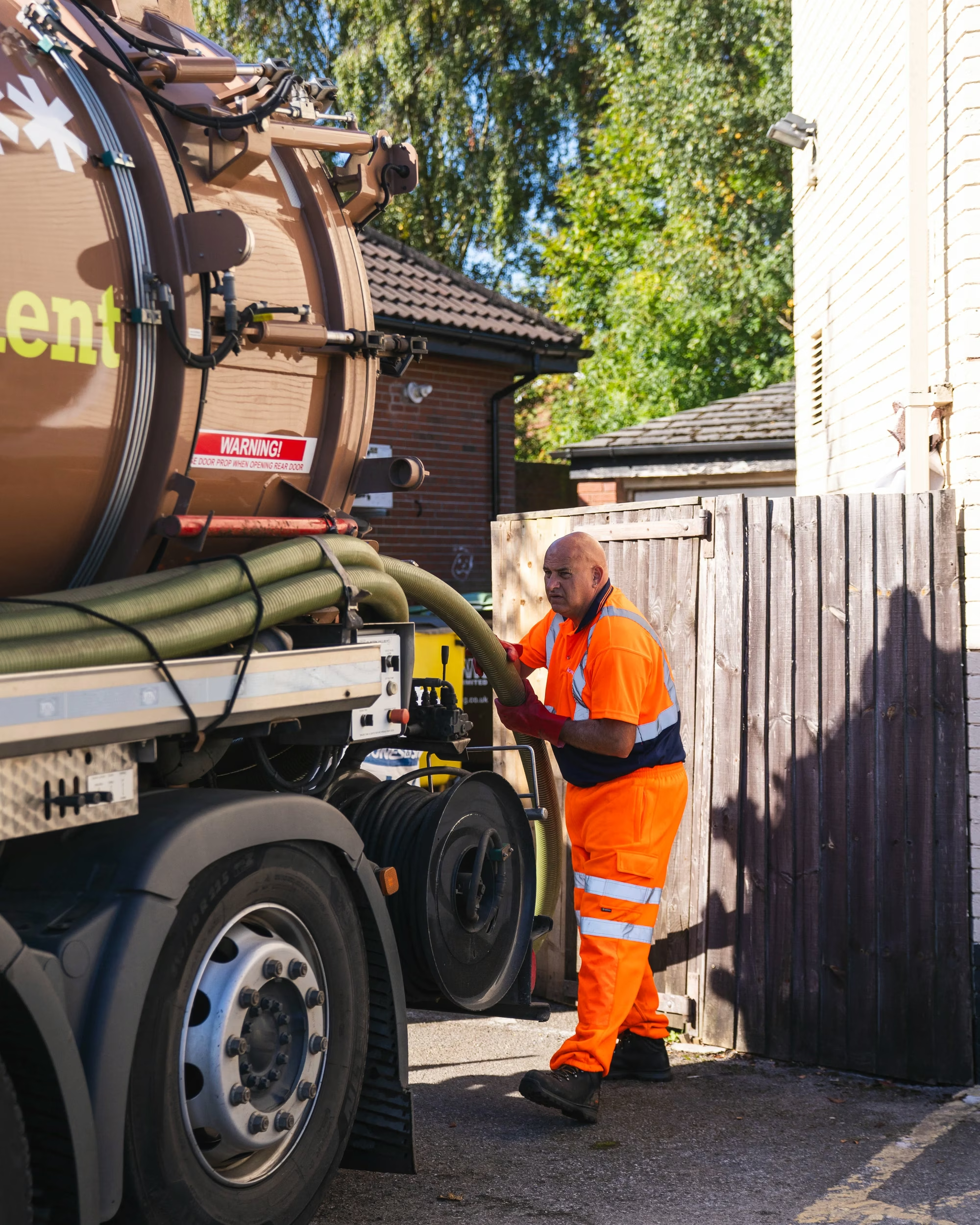
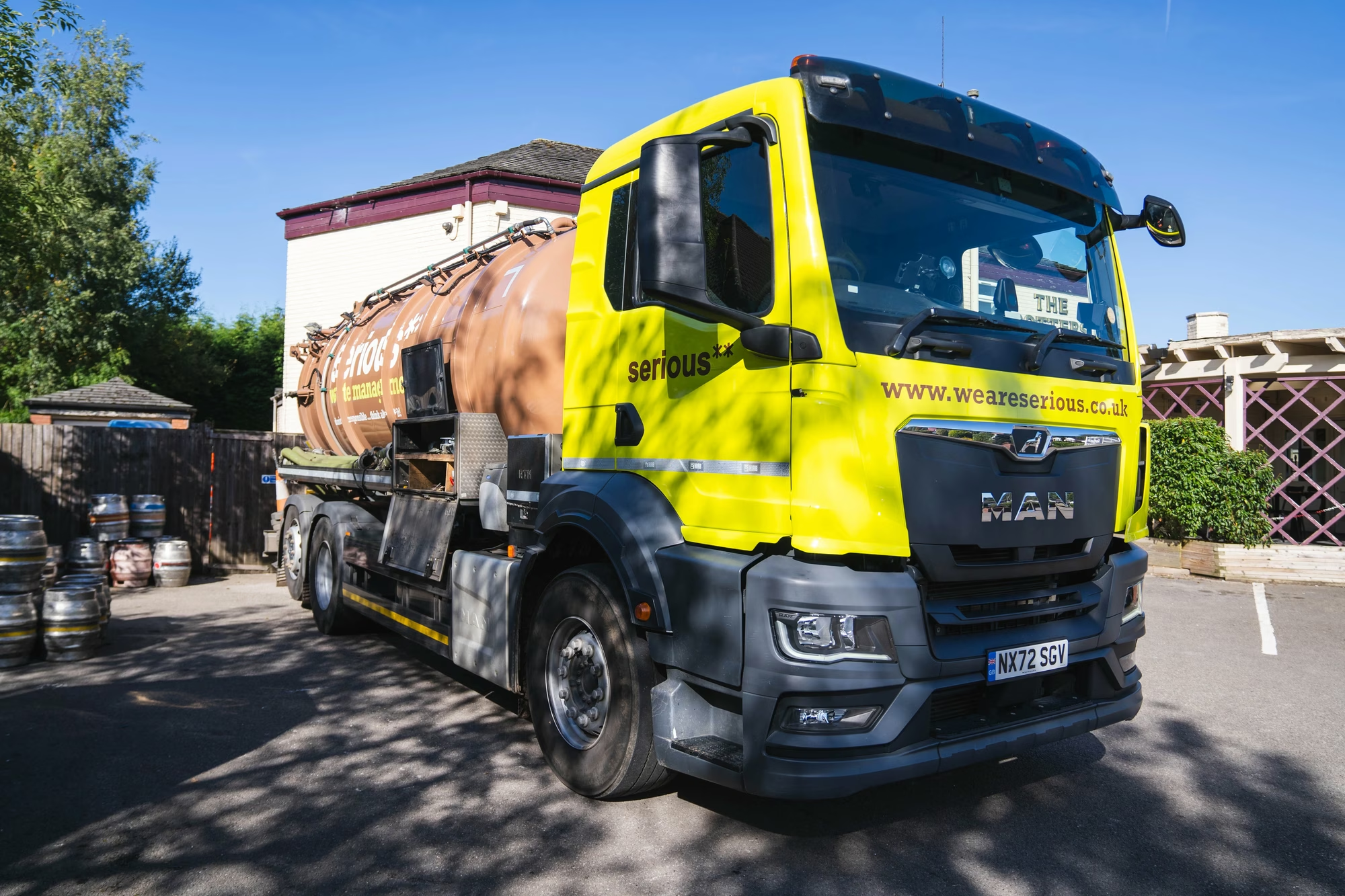
- Grease trap tankering – licensed collection and disposal of FOG waste in line with environmental regulations.
- Fatberg removal – for kitchens already dealing with serious blockages that need urgent intervention.
As a general guide, a grease trap should be emptied once it reaches around 25% full of grease, though signs like slow drainage, odours or visible build-up are a clear signal that a service is overdue. We work with businesses across the UK to build a maintenance schedule that fits how your kitchen actually operates, not a generic one-size-fits-all plan.
get serious about grease management & contact us today
Don’t wait for a blocked drain, a failed inspection, or a fatberg to force the issue. Whether you need a new Trapzilla grease trap installed, a maintenance plan for your existing system, or a free site survey to work out the right solution for your kitchen, our team is ready to help.
Get in touch with serious today** to talk about Trapzilla and the rest of our grease management services, or call us on 0800 988 8020 to speak to the team directly.
time to get serious**
If you're ready to get serious** about your sewage systems and grease management, our team of experts is ready to help. Whether you need a new system installed or ongoing maintenance, we provide comprehensive services for both residential and commercial clients.
high-efficiency commercial grease trap for UK kitchens
Grease buildup in commercial kitchens is one of the most common (and most preventable) causes of blocked drains, failed compliance checks and unplanned downtime. If your kitchen produces fats, oils and grease (FOG) at volume, choosing the right grease trap isn’t optional; it’s the difference between a smooth-running kitchen and an expensive emergency callout.
At serious**, we supply, install and maintain the Trapzilla grease trap, a high-efficiency grease interceptor built for commercial kitchens that need maximum FOG capture with minimum maintenance.
what is a grease trap and why does your commercial kitchen need one?
A grease trap (also known as a grease interceptor or grease separator) is a unit fitted into your kitchen drainage that captures fats, oils and grease before they reach the public sewer. Wastewater flows through the trap, grease rises and is retained, and cleaner water continues on to the drainage system.
Under UK Building Regulations Part H, commercial kitchens serving hot food and connected to mains drainage are expected to have an effective means of grease removal in place. Local water authorities can inspect premises, request evidence that FOG waste is being collected by a licensed contractor, and issue fines or enforcement action against businesses contributing to sewer blockages.
Commercial kitchens that don’t manage FOG properly risk:
- Blocked drains and sewer backups caused by grease solidifying in pipework, leading to costly emergency repairs and potential closure while repairs are carried out.
- Compliance failures and fines if a local authority inspection finds inadequate grease management or missing waste transfer records.
- Environmental damage, as FOG entering watercourses contributes to pollution and harms local ecosystems.
- Reputational damage, particularly for hospitality and food service businesses where hygiene failures are highly visible to customers and regulators alike.
A correctly sized, well-maintained grease trap is the simplest way to avoid all four.
what is trapzilla? the high-capacity grease interceptor built for busy kitchens
Trapzilla is a next-generation grease interceptor designed to outperform traditional grease traps on every measure that matters to a busy commercial kitchen: capacity, maintenance frequency and long-term running cost.
Unlike standard grease traps that fill quickly and need weekly attention, Trapzilla is engineered to capture and retain up to 95% of FOG even under high-volume wastewater flow. That means fewer call-outs, less disruption to kitchen operations, and a lower total cost of ownership over the lifetime of the unit.
key features of the trapzilla grease trap
- High grease retention capacity – Holds significantly more FOG than conventional grease traps before needing to be emptied.
- Compact, space-saving footprint – Designed to fit kitchens with limited back-of-house or under-sink space, without compromising on performance.
- Straightforward installation – Fits into new and existing drainage systems with minimal disruption to your kitchen.
- Durable, corrosion-resistant construction – Built to withstand constant exposure to hot water, oils and food waste without degrading.
- Reduced service frequency – Fewer scheduled empties means lower ongoing maintenance costs and less downtime.
trapzilla vs traditional grease traps: what’s the difference?
Most older or budget grease traps rely on small tanks that fill up fast and require frequent manual cleaning, often weekly, sometimes more. For a busy kitchen, that adds up to real labour costs and real risk if a service is missed.
Trapzilla is built specifically to solve that problem:
- Higher FOG retention – traps more grease per service interval, so you’re not constantly topping up maintenance visits.
- Longer operational lifespan – corrosion-resistant materials resist the wear that shortens the life of cheaper units.
- Lower maintenance burden – fewer interruptions to kitchen workflow and lower total servicing costs across the year.
- Consistent wastewater flow – reduces the risk of blockages building up between scheduled services.
is a trapzilla grease trap right for your business?
Trapzilla suits any food-producing business with a hot food kitchen connected to mains drainage, including:
- Restaurants, pubs and gastropubs
- Hotels and hospitality groups
- Catering companies and contract caterers
- Food processing and manufacturing facilities
- Schools, care homes and institutional kitchens
If your kitchen is currently relying on an undersized or outdated grease trap, struggling with frequent blockages, or due for an upgrade ahead of a compliance inspection, Trapzilla is worth a conversation with our team.
grease trap installation, maintenance and tankering across the UK
A grease trap is only as good as the service plan behind it. At serious**, we don’t just supply Trapzilla units; we provide the full lifecycle of support:
- Grease trap installation – correctly sized and positioned for your kitchen’s output and layout.
- Grease trap servicing and maintenance – scheduled cleaning to keep your system compliant and operating efficiently.
- Grease trap tankering – licensed collection and disposal of FOG waste in line with environmental regulations.
- Fatberg removal – for kitchens already dealing with serious blockages that need urgent intervention.
As a general guide, a grease trap should be emptied once it reaches around 25% full of grease, though signs like slow drainage, odours or visible build-up are a clear signal that a service is overdue. We work with businesses across the UK to build a maintenance schedule that fits how your kitchen actually operates, not a generic one-size-fits-all plan.
get serious about grease management & contact us today
Don’t wait for a blocked drain, a failed inspection, or a fatberg to force the issue. Whether you need a new Trapzilla grease trap installed, a maintenance plan for your existing system, or a free site survey to work out the right solution for your kitchen, our team is ready to help.
Get in touch with serious today** to talk about Trapzilla and the rest of our grease management services, or call us on 0800 988 8020 to speak to the team directly.
time to get serious**
Helpful Resources
similar systems

Sewage Treatment Plants
We take sewage waste treatment seriously- but that doesn’t mean it can’t be straightforward and stress-free! Whether you need a reliable sewage treatment plant for your home or a more robust system for your business, we’ve got you covered.

Pump Stations
serious** take the hassle out of managing wastewater with expert pump station services.

septic tanks
If you’re looking for septic tank desludging, serious** is a trusted specialist.

cesspools
Cesspools provide an effective way to manage wastewater and sewage for homes and commercial properties in rural areas, where mains drainage is unavailable.
other Systems Solutions

similar systems
Sewage Treatment Plants
We take sewage waste treatment seriously- but that doesn’t mean it can’t be straightforward and stress-free! Whether you need a reliable sewage treatment plant for your home or a more robust system for your business, we’ve got you covered.
Pump Stations
serious** take the hassle out of managing wastewater with expert pump station services.
septic tanks
If you’re looking for septic tank desludging, serious** is a trusted specialist.
cesspools
Cesspools provide an effective way to manage wastewater and sewage for homes and commercial properties in rural areas, where mains drainage is unavailable.
other Systems Solutions
who is this for?
frequently asked questions
Trapzilla traps have a compact design with high grease-holding capacity, requiring less frequent cleaning while effectively managing grease waste.
Regular inspections are key, but generally, it should be cleaned when 25% of its volume is filled with grease.
A commercial grease trap should be maintained by licensed waste professionals who can safely remove and dispose of FOG waste in accordance with environmental regulations. Professional servicing also extends the lifespan of the system.
Grease trap installation cost varies depending on unit size, site accessibility, groundworks and whether it’s an internal or external system. A professional site survey ensures accurate pricing and compliance with commercial standards.
Most food-producing businesses are required to have a grease management system in place. Installing a properly sized grease trap helps prevent sewer blockages, protects the environment and ensures regulatory compliance.
Signs include slow drainage, unpleasant odours, overflowing traps or visible grease build-up. Scheduled tankering prevents system failure and emergency disruptions.
All waste collected during grease trap tankering is transported and processed at licensed treatment facilities in accordance with environmental legislation.


